
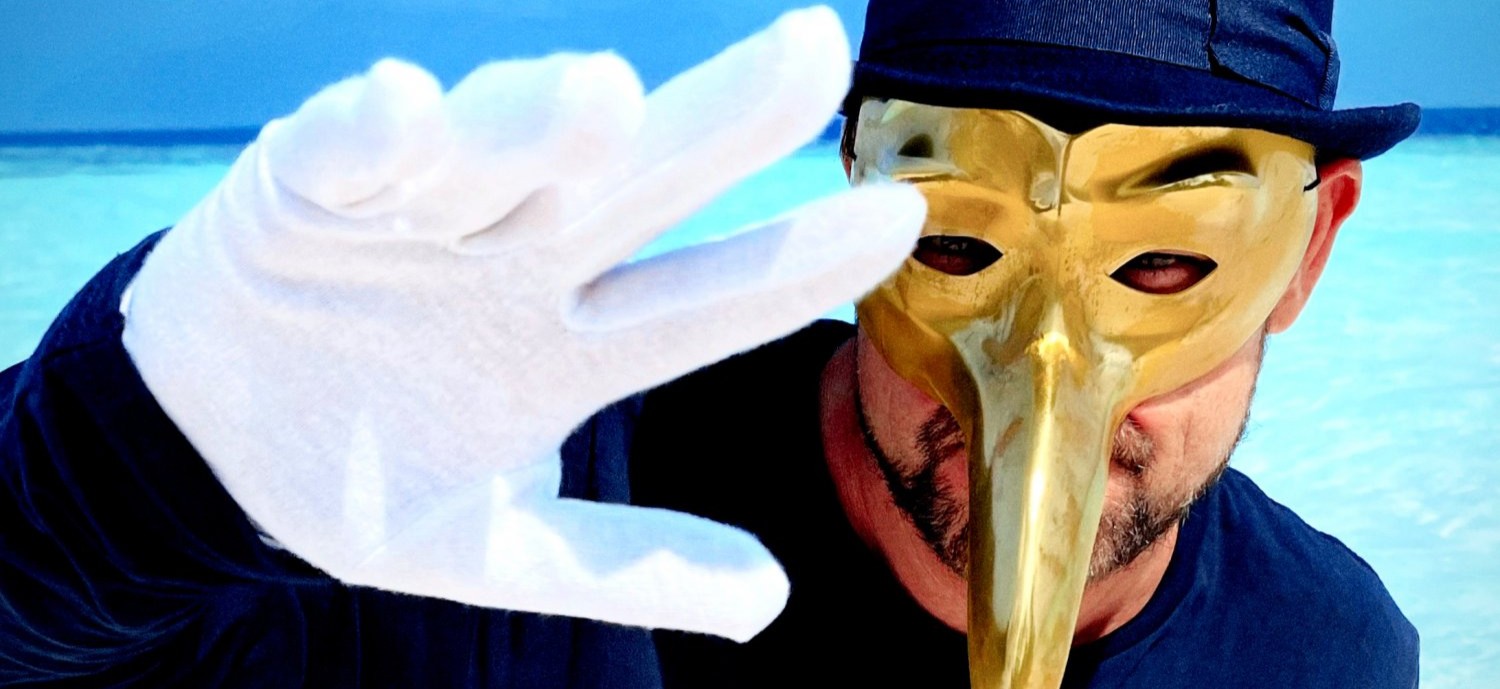
El artista enmascarado charla con nosotros con motivo del lanzamiento de ‘Wanderer’, su nuevo disco, un trabajo que no busca solo el clímax de la pista, sino también el viaje emocional que ocurre más allá del club
Wololo Sound: Hola, Claptone, es un placer darte la bienvenida de nuevo a Wololo Sound dos años después de nuestra última entrevista. Antes de nada: ¿cómo te va, tanto en lo personal como en lo profesional?
Claptone: Es un placer estar de vuelta. Creo que la respuesta más sincera es: centrado. Los últimos cuatro años han sido un periodo de mucho trabajo creativo, en el que he ido construyendo el mundo de ‘Wanderer’ pieza a pieza y perfeccionándolo, asegurándome de que mereciera el estatus de álbum.
Wololo Sound: Hi Claptone, it’s a pleasure to welcome you back to Wololo Sound two years after our last interview. First of all: how are you doing both personally and professionally?
Claptone: It’s a pleasure to be back. I think the most honest answer is: focused. The last four years have been a period of a lot of creative work building the world of ‘Wanderer’ piece by piece and refining it, making sure it deserved to be called an album.
WS: Y ahora, hablando del gran tema del momento: estás iniciando una nueva etapa con ‘Wanderer’ tras haber estado dando pistas sobre este disco durante bastante tiempo. ¿Qué se siente al poder presentar por fin el álbum al completo?
C: Hay una sensación de alivio muy particular que se siente al publicar un álbum, no porque el trabajo haya terminado, sino porque por fin le pertenece al público y no únicamente a mí. ‘Wanderer’ lleva mucho tiempo cobrando vida en mi mente y en el estudio, así que presentarlo en su totalidad significa que la conversación por fin puede comenzar de verdad. Los singles te dan una pequeña impresión, pero el álbum es la declaración de intenciones propiamente dicha.
WS: And now, talking about the big highlight: you are entering a new chapter with ‘Wanderer’ after teasing this record for quite some time. What does it feel like to finally be able to present the album in full?
C: There’s a specific kind of relief that comes with releasing an album, not because the work is done, but because it finally belongs to the world and not just to me. ‘Wanderer’ has been alive in my mind and in the studio for a long time, so presenting it in full means the conversation can finally begin properly. Singles give you glimpses, but the album is the actual statement.
WS: Cuando observas ‘Wanderer’ en su conjunto, ¿en qué aspectos percibes continuidad y en cuáles intentaste romper de forma más consciente con el lenguaje que habías utilizado anteriormente en ‘Closer’, ‘Fantast’ y ‘Charmer’?
C: La continuidad reside en la ambición y la convicción de que la música house puede transmitir algo más profundo que un simple tema de discoteca enfocado a la pista de baile. El formato del álbum, la elección de las voces, el arco emocional: esos hilos conductores están presentes en todos los discos. Donde ‘Wanderer’ rompe con lo anterior es en su sensación de apertura. Hay más espacio en este álbum, más disposición a dejar que un momento respire en lugar de ir acumulando tensión hasta llegar a un clímax. Me interesaba menos el clímax y más el viaje.
WS: When you look at ‘Wanderer’ as a whole, where do you feel the deepest sense of continuity, and where did you most consciously try to break with your own past language seen in ‘Closer’, ‘Fantast’ and ‘Charmer’?
C: The continuity is in the ambition and the belief that House music can carry something deeper than a functional club record. The album format, the vocal choices, the emotional arc: those threads run through all the records. Where ‘Wanderer’ breaks with what came before is in its sense of openness. There’s more space in this album, more willingness to let a moment breathe rather than build to a peak. I was less interested in the climax and more interested in the journey.
WS: ‘Wanderer’ cuenta con un elenco de colaboradores muy variado, desde Sea Girls y Crystal Fighters hasta Raphaella y Hannah Boleyn. En lugar de limitarte a incluir nombres conocidos, ¿qué buscabas en cada voz y qué creías que cada una de ellas podía aportar de forma única a una canción concreta?
C: Busco voces con carácter e historia, personas que aporten algo propio. En mis álbumes, trabajo con vocalistas procedentes de bandas y del panorama indie, porque aportan una emoción más directa y diferente a la de las voces que se escuchan en todos los lanzamientos de este año. Cada colaboración aquí se basó en lo que una voz concreta podía aportar a una canción concreta. Sea Girls aportan una energía épica que impacta de otra manera en el sonido Claptone. Raphaella aporta intimidad. Hannah Boleyn aporta de forma sutil un componente muy evocador. Esa diversidad se refleja a lo largo de todo el álbum.
WS: ‘Wanderer’ features a very diverse cast of collaborators, from Sea Girls and Crystal Fighters to Raphaella and Hannah Boleyn. Rather than just adding recognizable names, what were you looking for in each voice, and what did you feel each of them could uniquely unlock in a specific song?
C: I look for voices with character and history, people who carry something of their own into the room. On my albums, I work with vocalists from band and indie backgrounds, because they bring a different emotional directness than the voices you hear across every dance record this year. Each collaboration here was driven by what a specific voice could reveal in a specific song. Sea Girls bring an anthemic energy that hits differently in a Claptone context. Raphaella brings intimacy. Hannah Boleyn brings something quietly haunting. That diversity plays through the whole album.
WS: Tus álbumes siempre han tenido una fuerte conexión con el club, pero ‘Wanderer’ parece apuntar también hacia una dimensión más introspectiva. ¿Abordaste este álbum pensando principalmente en la pista de baile, o te interesaba más crear una experiencia auditiva que pudiera ir más allá de ella?
C: Ambas cosas, siempre, y la tensión entre ellas es, de hecho, donde nace la música más interesante. Nunca hago discos pensados exclusivamente para la pista de baile, porque admiro profundamente el formato del disco y lo que te permite expresar cuando no estás limitado por una finalidad concreta. Con ‘Wanderer’, quería música que funcionara a las 3 de la madrugada en una discoteca, pero también a las 3 de la madrugada estando solo. La pista de baile imprime la energía; la soledad aporta la profundidad. Los mejores momentos surgen cuando esas dos cosas se encuentran.
WS: Your records have always had a strong relationship with the club, but ‘Wanderer’ seems to suggest a more inward-looking dimension as well. Did you approach this album thinking primarily about the dancefloor, or were you more interested in building a listening experience that could live beyond it?
C: Both, always, and the tension between those two things is actually where the most interesting music happens. I never make albums purely for the dancefloor, because I deeply admire the album format and what it allows you to express when you’re not constrained by function. With ‘Wanderer’, I wanted music that works at 3am in a club but also at 3am alone. The dancefloor informs the energy; the solitude informs the depth. The best moments are where those two things meet.
WS: Varios de los sencillos publicados antes del lanzamiento del álbum completo también han ido acompañados de remixes, lo que sugiere que ‘Wanderer’ podría tener una vida más allá del álbum en su formato original. Al pensar en esa segunda vida, ¿qué es lo que hace que una canción sea apta para una remix? ¿Y podemos esperar que más temas del álbum sean reinterpretados de esa manera tras el lanzamiento completo?
C: Una canción está lista para una segunda vida cuando su esencia es lo suficientemente potente como para sobrevivir a la transformación. Si el ADN emotivo de un tema es claro, un remix puede llevarlo a un lugar completamente nuevo sin perder lo que le dio sentido en un principio. Los vocalistas de este álbum, las melodías… esos son cimientos sólidos. Así que sí, espero que el álbum siga vivo más allá de su fecha de lanzamiento. Me interesa ver qué encuentran otros artistas en este material, qué puertas abren que a mí no se me ocurrió llamar.
WS: Several of the singles released before launching the album in full have also been accompanied by remixes, which suggests that ‘Wanderer’ may have a life beyond the album in its original form. When you think about that second life of a track, what makes a song suitable for rework? And can we expect more of the album’s tracks to be reinterpreted in that way after the full release?
C: A song is ready for a second life when its core is strong enough to survive transformation. If the emotional DNA of a track is clear, a remix can take it somewhere completely new without losing what made it meaningful in the first place. The vocalists on this album, the melodies, those are strong foundations. So yes, I expect the album will continue to breathe beyond its release date. I’m interested in seeing what other artists find in this material, what doors they open that I didn’t think to knock on.
WS: La última vez que hablamos, nos comentaste que aún no había llegado el momento de sacar un nuevo álbum, ya que te estabas centrando en un sonido más orientado a la pista de baile a través de tu sello Golden Recordings. Ahora que ‘Wanderer’ por fin ha llegado, ¿qué importancia tuvo esa etapa a la hora de definir la identidad del álbum?
C: El trabajo más orientado al club que vengo haciendo con Golden Recordings me ha mantenido conectado con la pista de baile de una forma muy directa, y me ha hecho agudizar mi instinto para saber qué funciona en una sala. Y luego, ‘Wanderer’ se convirtió en el espacio donde pude tomar todo lo que había aprendido y convertirlo en algo más elaborado y meditado. Ambos procesos se retroalimentan. No puedes tener el álbum sin lo aprendido en las producciones orientadas al club, y esas producciones orientadas al club al mismo tiempo se vuelven más conscientes cuando sabes que también estás construyendo un universo que va más allá.
WS: The last time we spoke, you suggested that the moment for a new album was still ahead, as you were focused on more club-driven material through your label Golden Recordings. Looking at ‘Wanderer’ now, how important was that phase in shaping the album’s identity?
C: The club-driven work through Golden Recordings kept me connected to the dancefloor in a very direct way, as it sharpened my instinct for what works in a room. And then ‘Wanderer’ became the place where I could take everything I learned and push it into something more composed and more considered. The two processes feed each other. You can’t have the album without the club work, and the club work becomes more intentional when you know you’re also building towards something larger.
WS: Y hablando de Golden Recordings, y comparándolo con tu otro sello, Golden Path, parece que representan dos direcciones complementarias: una más directa y orientada a las discotecas, y la otra más centrada en la composición, la atmósfera y la melodía. ¿Cómo interpretas personalmente el diálogo entre estos dos sellos discográficos, y qué te permite explorar cada uno de ellos que el otro no?
C: Son dos conversaciones diferentes que tienen lugar dentro del mismo universo. Golden Recordings es donde me dirijo directamente a la pista de baile: es inmediato, físico y funcional en el mejor sentido de la palabra. Golden Path es más personal y es donde construyo el mundo que existe alrededor y más allá de la pista de baile, centrándome más en la composición, la atmósfera… ya sabes, ese tipo de música que trasciende a la noche. Necesito ambas cosas. Una sin la otra estaría incompleta. El diálogo entre ellas es, en realidad, lo que define a Claptone más que cualquiera de las dos por separado.
WS: And speaking about Golden Recordings, and comparing it to your other label, Golden Path, it seems they represent two complementary directions: one more direct and club-driven, the other more focused on songwriting, atmosphere and melody. How do you personally understand the dialogue between those two labels, and what does each one allow you to explore that the other doesn’t?
C: They are two different conversations happening within the same universe. Golden Recordings is where I speak directly to the dancefloor, immediate, physical, functional in the best sense. Golden Path is more personal and where I build the world that exists around and beyond the dancefloor with more of a focus on songwriting, atmosphere, you know, the kind of music that outlasts the night. I need both. One without the other would be incomplete. The dialogue between them is actually what defines Claptone more than either one alone.
WS: Como medio de comunicación español, nos resulta especialmente interesante ver que Golden Recordings da cabida a artistas como Alexander Som, Crusy, Alex Now o Darío Núñez. ¿Qué es lo que te ha atraído del talento español en particular y cómo valoras el momento actual de la escena house española?
C: Lo que me atrajo de esos artistas es lo mismo que me atrae de cualquier artista de Golden Recordings: una visión clara y un sonido que se siente como propio. España siempre ha tenido una relación fuerte y cercana con la música electrónica, y en este momento está surgiendo una generación de productores que comprenden tanto la historia como las posibilidades del house. Alexander Som, Crusy… son artistas con una identidad genuina. La escena española actual tiene energía y profundidad, y creo que aún estamos en la primera fase de descubrir lo que puede llegar a producir.
WS: As a Spanish media outlet, it is especially interesting for us to see Golden Recordings giving space to artists such as Alexander Som, Crusy, Alex Now, or Dario Nuñez. What has drawn you to Spanish talent in particular, and how do you view the current moment of the Spanish house scene?
C: What drew me to those artists is what draws me to any artist on Golden Recordings: a clear vision and a sound that feels like it belongs to them. Spain has always had a strong and passionate relationship with electronic music, and right now, there’s a generation of producers coming through who understand both the history and the possibilities of House. Alexander Som, Crusy, these are artists with genuine identity. The Spanish scene has energy and depth at the moment, and I think we’re still in the early stages of seeing what it produces.
WS: Y por último, pero no por ello menos importante: tras ‘Wanderer’, ¿hacia dónde se dirige Claptone ahora, tanto musical como creativamente?
C: Todo mi universo está lleno de historias, y puede que no todas sean reales. Lo que sí puedo decir es que ‘Wanderer’ no me parece un final, sino más bien una puerta. El universo de Claptone nunca se creó para quedarse estancado. Hay más mundos por explorar, más voces con las que colaborar, más noches por crear. Llevo haciendo esto desde que era muy joven, y la curiosidad no ha decaído. Si acaso, crece. Así que la respuesta sincera es: hacia adelante, siempre hacia adelante, y con la misma visión con la que comenzó todo esto.
WS: And last but not least: after ‘Wanderer’, where is Claptone heading next, both musically and creatively?
C: My whole universe is full of stories, and not all of them might be real. What I can say is that ‘Wanderer’ doesn’t feel like a conclusion but more like a door. The Claptone universe was never built to stand still. There are more worlds to explore, more voices to collaborate with, more nights to create. I’ve been doing this since I was very young, and the curiosity hasn’t diminished. If anything, it grows. So the honest answer is: forward, always forward, and with the same vision that started all of this.